WATERMARK

a poet’s notebook


Established 02004

Thursday Walk|Poetry Thursday

Utata Thursday Walk   Poetry Thursday

b. asks [in response to The Blue Bed]:

how do you keep this up? do you wear poet’s glasses all the time, or simply put them on like mr peabody from bullwinkle when you want to do this thing you do?

Ah, yes — those poet’s glasses. So attractive.
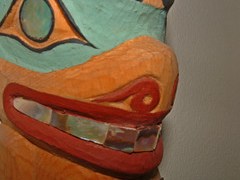
totem

Good
question, though. What is this thing I do? I don’t just sit down and
write a poem; it requires an ongoing practice of attention; a
willingness to be boring, to be trivial, to be mundane.

It’s like
prayer, or my understanding of prayer — not a solicitation, but an
acknowledgement of how it is: this hurts, this is beautiful, I am afraid.

urban tulips

For years I did it by writing every day — not poems, but immediacy. I record my dreams, describe the room, think: There’s something I want to tell you — and go from there.

Who are you? Sometimes I know; sometimes I don’t; but usually I do have a particular audience/ reader in mind — even a fictional one.

pencil jar

In these times of creative nonfiction and fictionalized memoirs, I think of the poem itself as true fiction: it is most likely not factual, but it must be true.
It is likely to be — it is best if it is — a truth I did not know
before I wrote, and may not understand even then. A poem is my way of
discovering (dis-covering) what I feel; sometimes, what I think.

I like words, the shape and feel of them in my mouth.   exquisite  crunchy  sigh 

As illness has made my world — and my walks — more circumscribed, I look harder at small things, at details.
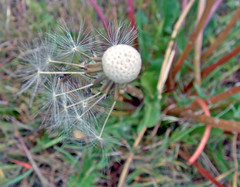
dandelion

I have lots around me to look at — to listen to, taste, touch, smell.
teapot

I
think that, for poetry, discovering oneself is as important as learning
the craft (which is essential.) It’s as you discover yourself that your
own voice emerges within the shape of the poem.

finial

This is how it works for me.

All
this requires a lot of solitude, a kind of internal spaciousness. When
energy is sparse, I spend it inside. Not indoors, but inside. This
makes me an erratic friend, and a poor correspondent.

When there is energy to spare, you find me in your comments.
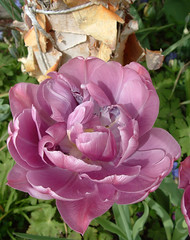
tulip & birch

13 responses to “Thursday Walk|Poetry Thursday”

  1. Wow. What a great meditation on poetry writing. And you’re so right that it must be true.

  2. I think you’ve captured the experience of many of us in the craft, SB. I’ve also been known to say that I write poems in order to find out what I really think. I even identified with your last sentences about energy levels, and being “an erratic friend, and a poor correspondent.” Yep, that’s how it is. Thanks.

  3. You said a lot of inspiration things here, but I will walk away most remembering your use of (dis-covering).

  4. I love everything. about. this. post.
    You have a great writing process, and you articulate that process so well. I love the observations the writing poetry requires a willing to be boring. I love the identification of being afraid when writing, of it hurting and being beautiful ~ all at the same time.

  5. Ah, so that is how it is.
    I, too, enjoy “words, the shape and feel of them in my mouth,” and the sound of them as they click and swish and fill the air like a strong wind.

  6. Such a lovely post and tribute to the effort required to write poetry. I agree, it can almost be like prayer.

  7. Simple as that, eh?
    I’ve read this a couple of times already, it’s so eloquent and, as others have noted, True. I’ve linked to this post on my own blog as well, so expect hordes of visitors seeking inspiration.
    Maybe you know this Frost quote on the source of poetry: “How many things have to happen to you before something occurs to you?” His take is a bit harder-edged than yours (it IS Frost, after all), but it seems to me you’re saying about the same thing.

  8. Enter the John B.’s hordes: Stage left.
    I appreciate the thoughts and find much truth in them. Not being a poet (or rather a bad one), when I need to write (prose) I often find myself outside with one ear to the ground: I need to know where the horses are coming from before I can mount my counter attack. Perhaps this is simply the difference between a good self-assured poet and a bad self-deprecating essayist.
    Tangentially, your comment on “dis-covering” reminds me of the greek word for truth, alethia: In Classical Greek, Lethe literally means “forgetfulness” or “concealment”. The Greek word for “truth” is a-lethe-ia, meaning “un-forgetfulness” or “un-concealment”.

  9. Thank you all for your comments. I think I may try something like this (a photo essay?) again. It’s more demanding than a poem, probably just because I’m unpracticed at it.

  10. I love your idea of “true fiction.” I think that’s a wonderful way to describe the process. Thanks for re-sharing this.

  11. Awesome! Written with warmth and candor. The photos are a plus!

  12. Wow, this was so beautifully put…as I read each line, I kept nodding my head in complete agreement! I can relate to everything you said. :~) And I loved the photos to go along with it!

Leave a Reply

Discover more from WATERMARK

Subscribe now to keep reading and get access to the full archive.

Continue reading